
This post includes excerpts from Sacred Sight: Finding Hope Through Heartache, by Glenda Love Durano, Legacy Press, 2024.
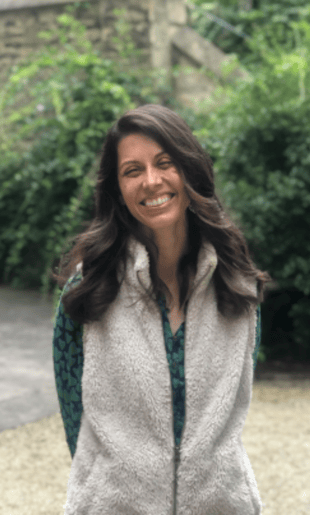
For as long as she can remember, Amberle Brown dreamed of taking the Gospel to an unreached people group—a population in which fewer than two percent of people identify as Christian. By age nine, Amberle had decided that medical missions would be her path.
She pursued that goal with remarkable determination. Amberle earned her first nursing degree at seventeen and spent her summers serving alongside missionaries. During college, she devoted weekends to helping refugees establish new lives in America. Sharing Christ with others wasn't simply something she did—it was central to who she was.
More Than Anything
More than anything, Amberle wanted to serve an unreached people group, and research said the most effective missionaries were people who were indigenous to that group. Amberle was an upper-middle-class Filipino American, and no amount of prayer could transform her into a person of an unreached ethnic heritage.
Then, in the fall of 2012, everything changed.
While studying for nursing exams during her senior year, Amberle developed a headache. A friend offered her an over-the-counter pain medication. Because she had never taken that particular drug before, she had no idea she was severely allergic to it. Within days, she began developing symptoms of Toxic Epidermal Necrolysis Syndrome (TENS), a rare allergic reaction that affects approximately one in 2.5 million people and kills one in three who have it.
Ninety-five percent of Amberle's skin and the protective linings throughout her body blistered and peeled away, as if she were being burned from the inside out. Her eyelids lost their protective lining, causing irreversible injury to her corneas. As a result, Amberle became blind.
As her vision disappeared, so did the future she had carefully planned.
Church had always been a constant in Amberle's life. Raised in a homeschooling family, she often accompanied her mother to church throughout the week while preparations were made for music ministry. She completed school assignments there, played there, napped there, and eventually served there. Because her father's military career required frequent moves, finding a new church was always one of the family's first priorities. Once they did, Amberle felt grounded again. Church represented friendship, belonging, encouragement, and meaningful service.
After losing her sight, however, church became one of the most difficult places to navigate.
The challenges were practical, emotional, and spiritual. Amberle often felt disconnected from the very community that had once felt like home. Some people seemed unsure how to interact with her and gradually pulled away. Others viewed her primarily as someone in need of a miraculous healing.
Meanwhile, everyday aspects of church life became barriers. She could no longer read lyrics projected on a screen, recognize familiar faces from across a room, or access many of the printed resources available to others. More than anything, she longed to participate fully in the life of the church. Although she remained eager to serve, many pastors and church leaders assumed her disability limited what she could contribute.
As she wrestled with these experiences, Amberle began researching disability and the Church. What she discovered surprised her. One in four Americans lives with a physical, developmental, or mental disability. More than seventy million Americans are disabled, yet fewer than fifteen percent of churches offer a disability ministry. Globally, an estimated eighty percent of families affected by disability never attend church or have the opportunity to hear the Gospel in a meaningful way. If people with disabilities were considered a single people group, they would represent the largest unreached people group on earth.
Amberle realized she'd never noticed people with disabilities at church before. Perhaps she was the only one. Then a question came to mind: Why aren't there people with disabilities at church? Before she could ponder the answer, however, she turned the question on herself: Why haven't I asked that question before?
Gradually, Amberle came to an important realization. Most churches were not intentionally excluding people with disabilities. More often, exclusion stemmed from uncertainty, fear, or a lack of understanding. What she had once viewed as the end of her missionary calling began to look very different. Through her disability, God had positioned her to reach a population that was frequently overlooked both inside and outside the Church.
After twenty-four years of waiting, God had directed her toward her calling: disability inclusion.
A Prayer Answered
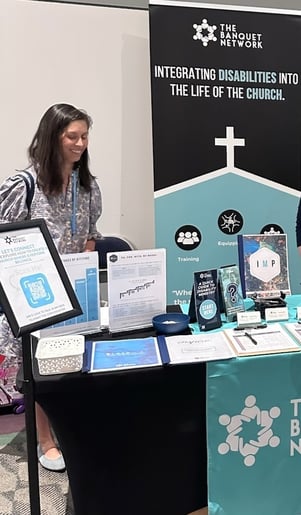
Since 2017, The Banquet Network has been on a mission of empowering followers of Christ to welcome and integrate individuals and families impacted by disabilities into the life of the local and global church.
Comments